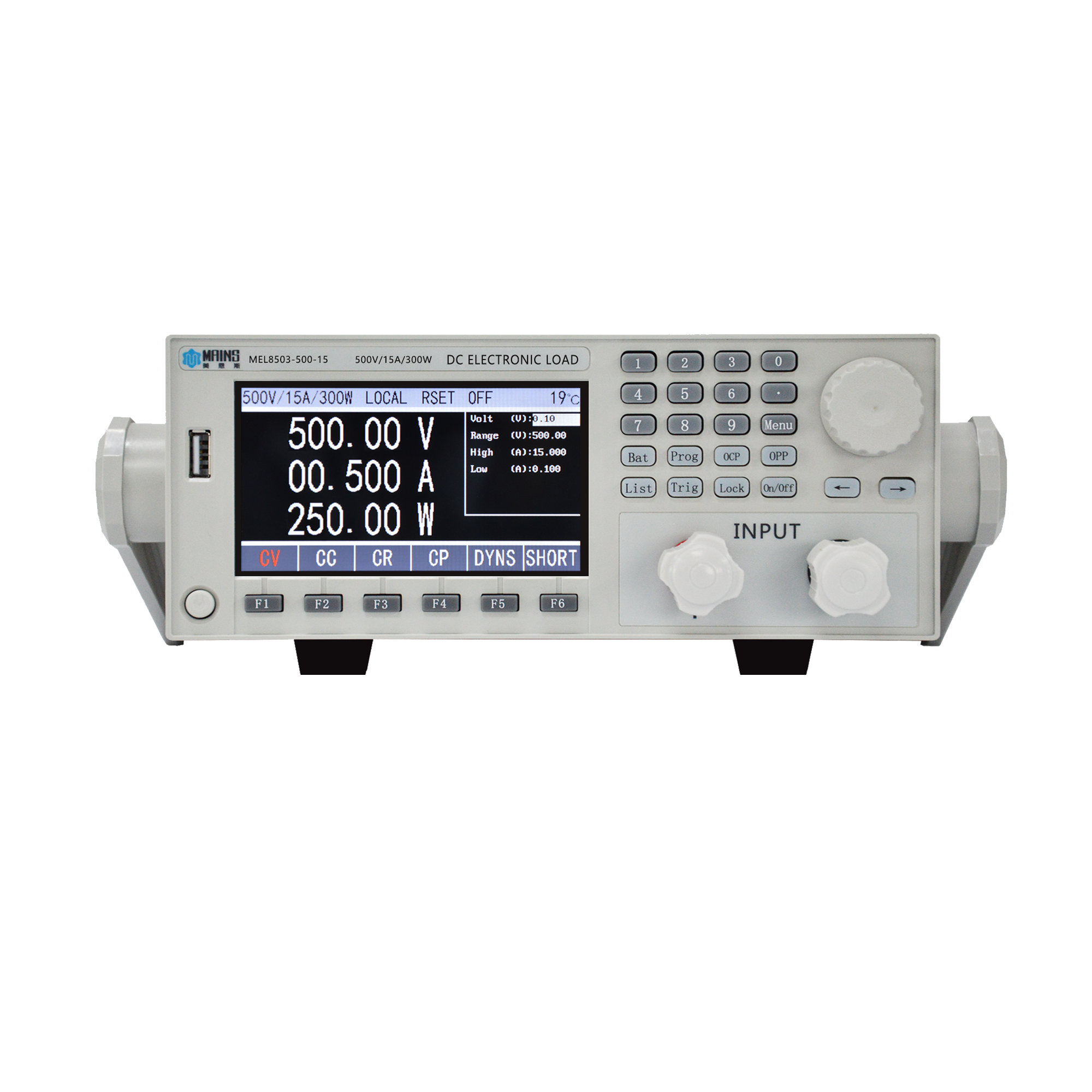
The high-power DC power supply is divided into positive and negative poles. The potential of the positive stage is very high, while the potential of the negative pole is very low. Once the two electrodes are connected to the circuit, a constant potential difference will be maintained between the two ends of the circuit, thus forming a current from the positive pole to the negative pole in the external circuit. If the difference between the water level alone cannot maintain a steady flow of water, a steady flow of water should be maintained by means of a pump to continuously send water from a low place to a high place.
In contrast, the electrostatic field generated by the charge alone is not enough to maintain a stable current, and a high-power DC power supply must be used, so that the positive charge can be returned to the higher positive electrode from the negative electrode with low potential through the inside of the power supply, thus maintaining the potential difference between the positive electrode and the negative electrode to form a stable current. Therefore, the high-power power supply is an energy conversion device, which can convert other forms of energy into electrical energy and provide it to the circuit to maintain the steady flow of the circuit.
High-power DC power supply is suitable for many places, such as large power plants, ultra-high voltage substations, hydropower plants, which are mainly responsible for the DC power supply of electrical devices such as control, signal, automatic closing, protection, and secondary circuit instruments. Features of high power DC power supply:
(1) High stability, low drift linear structure.
(2) There are two modes, constant voltage and constant current mode.
(3) simple operation, push-button output.
(4) The current/voltage resolution can reach 1MV/1MA.
(5) Two communication interfaces can be selected, one is RS-232C, the other is GPIB, and it can also be controlled by analog signal input.